Your role is companionship, not providing therapy
Parents do not need to become home psychologists every evening. Creative time can simply offer available attention, clear boundaries and permission to do things differently. This matters when families face constant advice about compulsory developmental activities. Paper, a box and a few pencils can support a shared story without an expensive kit. This article offers everyday examples, not a treatment programme. If your child receives professional support, agree any home tasks separately. You do not need to repeat therapeutic techniques they mention or try to accelerate psychological change yourself.
Agreeing a realistic time to create
Choose a moment when you are not simultaneously cooking a complicated meal or rushing out. A short time together may suit everyone better than an hour spent feeling tense. Explain the boundary: “We can use the paper until dinner, then put the materials away.” Make space for unfinished work so stopping does not mean destroying an idea. If the day is overloaded, postponing is allowed without guilt. Regularity can make family life predictable, but missing an evening does not deprive your child of a necessary therapeutic dose: we make no such claim for a home timetable.
Language that keeps the child in charge of their work
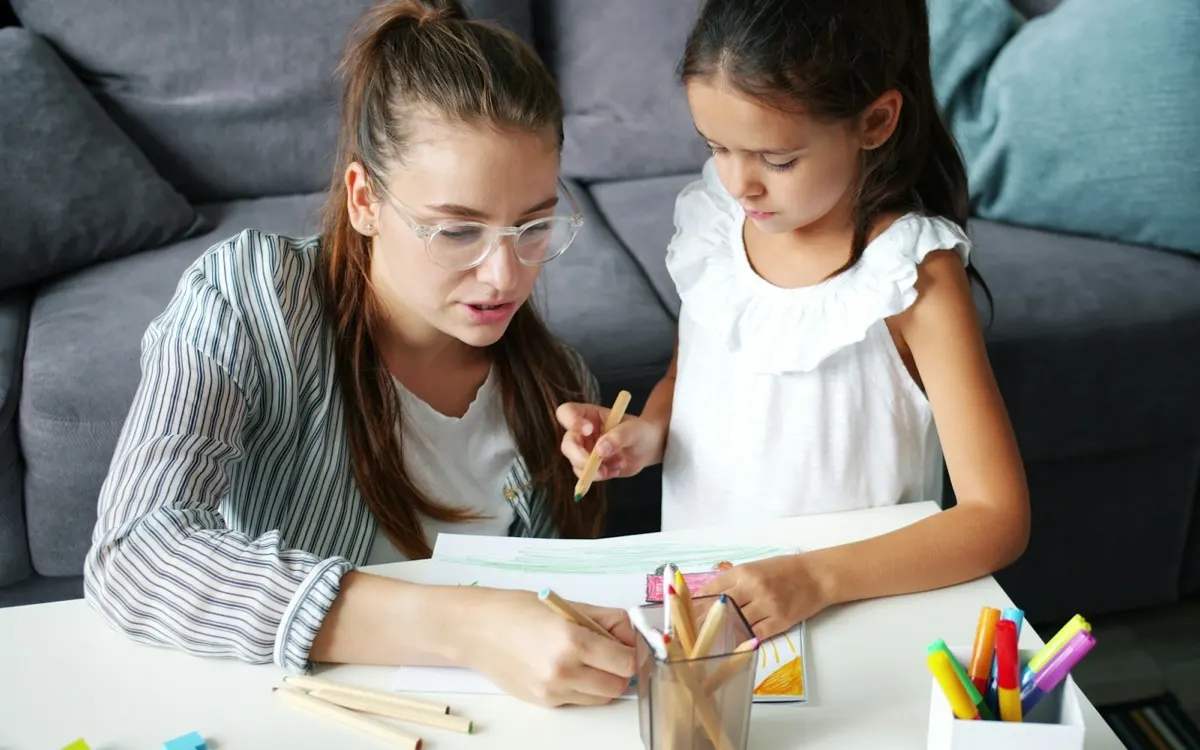
CDC describes the importance of children taking the lead in shared play. In art-making, practical examples include: “You made two different paths,” “I can see you changed your plan,” or “Would you like to tell me or just show me?” Compare these with “Why is the sun not yellow?” or “Let me do it properly.” The first responses describe what is happening; the second replace the child’s idea with an adult standard. You do not need to narrate every movement. A child may want company without conversation. If asked whether you like it, answer honestly and specifically without turning affection into grading.
Helping without taking over
Before adding to the work, ask: “Would you like a demonstration on separate paper, help holding this sheet, or no help yet?” Imagine a cardboard tower falling down. You can steady the base without rebuilding the entire structure. If the child asks you to do everything, find out which part they want to keep. Equally, do not refuse help in the name of independence. Tiredness, awkward scissors or an overly difficult task may explain the request better than laziness. A useful question for adults is whether their intervention enables participation or replaces it with a demonstration of their own skill.
Boundaries, frustration and repairing your own mistake
Creative freedom does not mean permission to damage belongings or hurt someone. Make boundaries concrete: “Paint stays on this table; if you want bigger movements, I can offer larger paper.” When a child is angry about a result, you need not immediately make it beautiful. Offer a pause, another material or leaving the work unfinished. If you react sharply to mess, return to it: “I was annoyed and spoke hurtfully. I could have explained more calmly.” Demonstrating repair is more useful than demanding perfect reactions from a child. The activity should not become an obedience test.
Siblings and different ways of joining in
Children sharing an activity may need separate workspaces, duplicate popular tools and permission not to make one shared picture. Avoid comparing speed, neatness or imagination. One builds, another sorts paper scraps and another watches: these are different forms of participation. Before a family collage, agree whether anyone may attach something to another person’s area. If collaboration repeatedly becomes a struggle, parallel pieces may work better. The aim of time together is not to produce a single photographic symbol of a happy family at any cost.
Whose artwork is it, and who may see it?
Ask whether the child wants the picture displayed, stored in a folder or put away. Before sending photographs to relatives or posting online, explain who will see them and take the child’s response seriously. Work can feel private even when it looks ordinary to an adult. Do not add a psychological caption such as “This shows how she is processing the divorce.” Artwork made in therapy follows the arrangements agreed with the practitioner for access and storage. Family pride does not remove privacy. Public display needs a separate voluntary agreement, not an assumption that agreeing to draw means agreeing to publication.
Working with a psychologist and caring for yourself
Bring observations to professional meetings: “She refused bedtime on three evenings” is more precise than “She clearly has hidden aggression.” Ask what home support is actually useful and what to avoid. You do not need to convert every family event into a report. If art activities make you particularly tense, choose another shared experience: reading, walking or preparing food. Liking paint is not a prerequisite for being an attentive adult. Support should reflect the whole family’s capacity, rather than create another daily examination that a mother or father can fail.