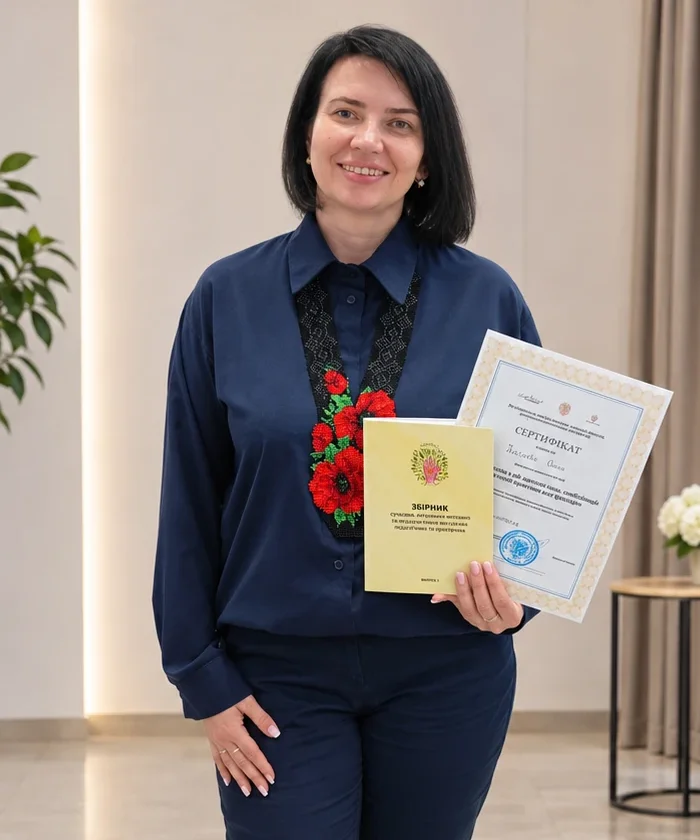
MEET THE PSYCHOLOGIST
Olha Illichova
Qualifications
- Practical psychologist of the highest category, holding the teaching title “Practical Psychologist-Methodologist”
- Special education teacher (intellectual disabilities) and speech therapist
- Certified art therapist
- Member of the expert council of the Ukrainian Association of Specialists in Child Psychology, Art Therapy and Art Pedagogy
Contact
[email protected]
Slavutych, Kyiv Oblast, Ukraine
What is art therapy
Art therapy is a form of psychological support in which drawing, clay, collage and other creative materials help express what is hard to put into words. What matters is not the artistic result but the process itself and what a person brings to it.
For children, creativity is a natural language. Through images, colour and shape a child can show feelings, fears and wishes, and an adult can understand their world better and offer support without pressure or judgement.
No drawing skills are needed. Art therapy complements medical care where it is needed, but does not replace it.
When it may help
- A child finds it hard to talk about feelings or has been through difficult events
- Anxiety, fears, tension or noticeable changes in behaviour
- Adjusting to change: a move, a new kindergarten or school, changes in the family
- Speech and communication difficulties — creative tasks can gently support development
- Special educational needs — working at a pace that feels comfortable for the child
- Parents who want to understand their child better and stay close
How the work usually goes
- Getting to know each other: a conversation with parents about the request, the child’s age and needs.
- Creative sessions: the child chooses materials while the specialist attentively supports the process.
- Talking about the work — without “decoding” the drawing and without judging it.
- Feedback for parents that respects the child’s confidentiality.