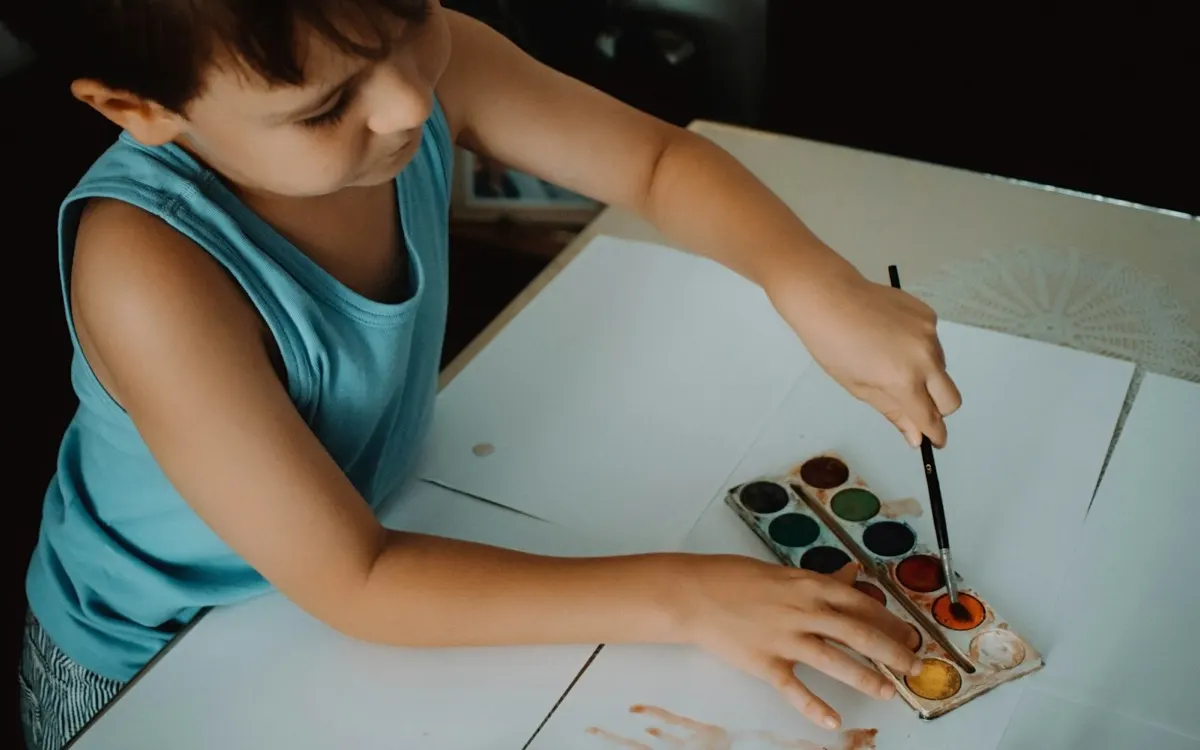
Start with a need, not a technique
When a child struggles to explain feelings, adults sometimes look for an exercise that will make them open up. A more useful starting point is what currently makes everyday life difficult. Perhaps the child has stopped playing with friends, finds a school move overwhelming, or repeatedly argues about homework. These are different concerns even when the same paints appear in sessions. Art therapy involves a professional relationship and an agreed purpose. Creative play at home can offer welcome support, but an exercise name does not turn it into psychotherapy. The practitioner should explain why this format suits this particular child.
How therapy differs from an art lesson
A lesson may teach perspective, colour mixing or careful cutting. In therapy, artistic achievement is not a measure of how well the child is doing. BAAT’s schools information explains that previous artistic experience is unnecessary. A child may talk, remain quiet, change direction or produce no finished work. Imagine a child repeatedly building and taking apart a paper house. That invites attentive observation and listening to their explanation, not an immediate conclusion about family life. The relationship, asking for help, and experiencing an adult who tolerates uncertainty without criticism also matter.
Age helps planning without determining everything
A younger child may prefer a brief introduction to materials and, by agreement, a familiar adult nearby. A school-age child may want clear rules and reassurance that drawings will not be marked. Teenagers should have options that do not feel childish, such as photography, comics, digital collage or a personal notebook. These are possible adaptations, not a fixed developmental programme. Language, movement, educational experience, culture and individual preferences affect choices. Chronological age does not justify making someone use a particular material or expecting a particular level of detail in their pictures.
Preparing for the first appointment
Families can prepare a short account of an ordinary day: when difficulties arise, what helps, and what has changed recently. There is no need to bring the strangest drawings as evidence of a problem. Ask about qualifications, experience with the child’s age, session structure and opportunities to review the approach. You might tell the child: “There are art materials and an adult you can talk to or make things with.” Do not promise that the appointment is simply entertainment if therapy is planned, or present it as a punishment for behaviour.
Consent and privacy in understandable language
Parental involvement and the child’s private space need discussion before work begins. BAAT’s ethics code combines involving carers in planning with respect for a minor’s confidentiality; specific legal requirements depend on where care takes place. Ask which general changes will be discussed with the family, who can see artwork, and when a safety concern must be shared. Children need an explanation they understand, rather than a promise of absolute secrecy. For example: “We will not repeat every conversation, but if someone is in danger, we will need to find help.”
Support at home without a hidden examination
After a session, try: “Would you like to talk or have some quiet time?” Avoid requiring the child to show artwork, repeat an activity or explain every colour. A few familiar materials and time together are enough for ordinary home play. Seattle Children’s guidance on child-directed play encourages adults to let the child lead. An everyday example is a child making a paper café: ask which role they want you to take instead of correcting the menu. This illustrates attentive interaction, not a treatment exercise or a test of whether therapy is working.
Look for change in everyday life
Agree on a few observable reference points. Instead of “becoming confident,” discuss whether asking a teacher for help, returning to play after disappointment, or communicating discomfort becomes easier. Include the child’s view: what an adult calls a problem may feel different to them. Do not count lighter colours as evidence of improvement. Record context, including sleep, demands and school changes. At an agreed review, discuss benefits, difficulties and unwanted effects. The duration of support should follow needs and outcomes, rather than the pressure to finish a prepaid sequence of exercises.
When the approach needs reconsidering
If a child consistently fears appointments, feels ashamed of their work or does not understand why they attend, raise this with the practitioner. Not wanting to draw once does not automatically mean failure; other materials, pacing or ways of relating may be possible. At the same time, art therapy should not delay assessment, educational support or other care that is needed. Significant everyday difficulties warrant discussion with a qualified child professional. For parents, the central question is: “Is our child understood here, is the plan transparent, and are changes happening that matter to them?”